
by Craig Johnson | May 11, 2026 | Education
A Monthly Note from Utah Lean Six Sigma Training Center
This monthly note is designed to respect your time and sharpen your thinking: one useful idea, one real-world insight, and one small nudge toward better work.
One Useful Idea – Growth Comes from Changing Your Role
At the Green Belt level, you learn to apply tools, lead tactical-level projects, and improve specific processes. You build skill and confidence through practice. At the Black Belt level, expectations shift. The work becomes more strategic and influential:
Many professionals reach a point where they can do the work, but they are not yet positioned to lead strategic efforts. Progress often depends on stepping into that next level of responsibility.
Lessons from Real Work
Where Growth Slows Down
We see a common pattern with strong Green Belt graduates:
- They apply what they have learned
- They run projects and get measurable results
- Over time, progress plateaus at tactical-level improvements
- They lead improvement activities, but lack influence on improvement strategy
Those who move into Black Belt training often describe a shift in how they perceive and operate within their organization. One former student shared, “I found myself thinking differently about which problems to take on; which projects had the biggest impact on the organization, not just one department or function.” The concepts are familiar, but the scope and influence expand. Instead of leading local improvement activities, the Black Belt guides and influences the overall strategic direction of multiple areas, entire sites, or the organization as a whole.
This is where organization and career growth happen!
Take a moment to reflect:
“Am I improving the organization as a whole or just knocking out random acts of improvement?“
The answer to this usually points you to the next step. If you’ve already completed your Green Belt and are contemplating the next step, this is a natural time to continue building on that foundation. Our next Lean Enterprise (Black Belt) cohort begins next month (June 15-18).
Register here: https://utahleansixsigma.com/class-calendar/
If you know someone who would benefit from practical, no-nonsense Lean training, we appreciate the introduction, and we show that
appreciation with cash.
• Lean Foundations (Yellow Belt): $20
• Lean Leadership (Green Belt): $50
• Lean Enterprise (Black Belt): $100
Friends, colleagues, and family members all count. This is our simple way of saying thank you.
by Craig Johnson | Dec 30, 2025 | Education
A Monthly Note from Utah Lean Six Sigma Training Center
This monthly note is designed to respect your time and sharpen your thinking: one useful idea, one real-world insight, and one small nudge toward better work.
One Useful Idea – Continuous Improvement Loves Small Cycles
One of the quiet lies we tell ourselves is that improvement requires huge effort, energy, and perfect timing. Lean thinking disagrees.
At its core, continuous improvement is built on short cycles of reflection and adjustment. Plan something small. Try it. Check what happened. Adjust. No fanfare. No heroics. Just progress.
The most common mistake organizations make is waiting for “the big reset”. The new system, the new year, the new initiative. In reality, improvement compounds fastest when learning cycles are short and frequent.
This quiet week between Christmas and New Year’s is a perfect example. It’s calm, reflective, and mostly free of meetings. In Lean terms, it’s an unusually good moment to check and adjust before the next plan begins.
Lessons for Real Work – Why Kaizens Loves the Calendar Turn
New Year’s resolutions tend to fail because they aim for transformation instead of
calibration.
What actually works is asking better questions:
• What caused friction this year?
• Where did work slow down for no good reason?
• Which problems kept repeating?
In addition to the normal strategic planning, one organization we worked with tasked each leader at every level with picking one recurring annoyance their team had lived with all year. After some calibration (remember: no random acts of improvement!), they focused on fixing those problems. No banners. No slogans. Just relief. That’s everyday kaizen in its natural habitat: modest, practical, and quietly effective.
As you head into 2026, resist the urge to overhaul everything. Improvement doesn’t need a resolution. It needs attention
Before the year officially transitions to 2026, ask this question in your next conversation with
subject matter experts or planning meeting:
“What’s one thing we should stop accepting as normal next year?”
Listen carefully (remember: go see, ask why, show respect!). The answers may be very specific and very fixable.
If you know someone who would benefit from practical, no-nonsense Lean training, we appreciate the introduction, and we show that
appreciation with cash.
• Lean Foundations (Yellow Belt): $20
• Lean Leadership (Green Belt): $50
• Lean Enterprise (Black Belt): $100
Friends, colleagues, and family members all count. This is our simple way of saying thank you.
by Craig Johnson | Feb 24, 2022 | Education
Tell me if you’ve heard this Lean joke before: A husband and wife walk into a bar the store…
The Setup
Two weeks prior, they had ordered a series of frames for new family photos to adorn their living room wall. They sat with the salesperson, weighed the options, paid a deposit, and left with an eagerness for the joy the images of their beloved family would add to their home. The photos would be particularly nice for the upcoming family summer party they were hosting in the very near future.
The couple waited patiently for those two weeks to pass. During this period of patient anticipation, they prepared the wall by removing the old photos and adding a touch of new paint. They measured and located where each hook would be placed.
The Crisis
Finally after the two weeks of waiting they excitedly drove back to the store to pick up their promised framed photos. They walked to the will call window, presented their receipt, paid the remainder of their bill…
And were told their frames weren’t ready.
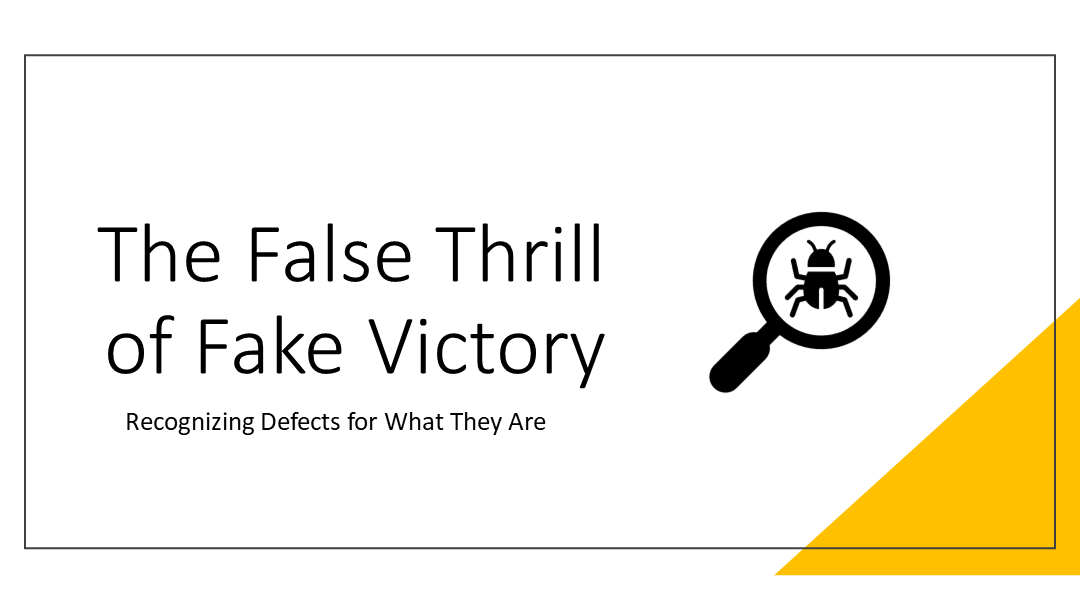
The Fake Victory
Exasperated, the now-frustrated couple inquired as to why their frames weren’t ready. A litany of excuses were offered, followed by many apologies, followed by zero excuses. The proverbial ball had simply been dropped.
In a blur of activity, store workers swarmed like the bees in a disturbed hive. One ran to the back room to pull inventory. Another dashed across the showroom to pick up the prints from their storage room. Yet another busy bee disappeared behind a desk to make a series of phone calls, pulling more resources in. At the end of a very hectic 15 minutes the workers proudly presented the couple with their freshly packaged set of framed family photos.
The False Thrill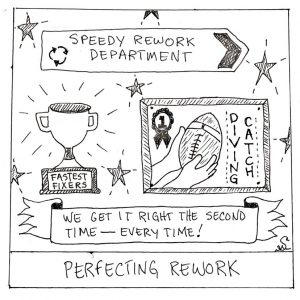
As the husband and wife left, the workers held a mild celebration. As a result of the (fake) victory, backs were patted. Cheers were raised. Fives were… highed. (Please forgive the author for that last one)
Once the excitement of spontaneous teamwork and the thrill of overcoming this hurdle subsided, work went back to normal. For months, workers fondly recounted stories of “that time we all came together”. Company leaders spoke about it at annual meetings.
Taking off the Rose Colored Glasses – A Lean Perspective
To be fair, using shared trials is a great way to build teamwork. There are, however, better ways to do this. Chief among those better ways are those that don’t include an unhappy customer. The first principle of Lean is to identify value. This means we understand exactly what our customers want and then spend the rest of our efforts in meeting those customer requirements.
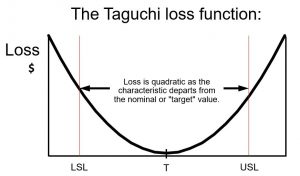
The reality is that even though the team pulled together to get the order done, the victory was false – diminished value was provided to the customer. Yes, the customers got their frames, but as Taguchi taught us, anything that deviates from perfect is a loss of value. These customers got their frames – but they got them late. The company got paid, but what are the chances those customers return again? What are the chances they tell their friends and relatives about their negative experience? How much time did we spend responding to this self-inflicted emergency when we could have been doing value-added work? How much more of this chaos can our employees take before they seek greener, more peaceful and organized, pastures?
Click to Enlarge
See Defects as They Really Are
It does very little good for us to celebrate victory over our problems if we do nothing to learn from them and make sure they don’t happen again. When defects occur, recognize them for what they are: negative experiences that, although they can also be learning experiences, are nonetheless damaging to an organization. Defects should be investigated, analyzed, and eliminated. Controls should be put in place to ensure the defect doesn’t happen again. Basic Lean tools such as 5S, standard work, mistake proofing, and visual management should be implemented. For larger, more systemic problems, formal projects should be organized and given the support and resources needed for success. Lean practices, including those taught in the Utah Lean Six Sigma Training Center courses teach us to pursue problem solving and improvements with relentless determination.
What’s Better Than Fixing Problems?
Fixing a problem, especially when a team really comes together to do it, can be really rewarding. The far better, albeit potentially less exciting, option is making sure the problem doesn’t happen in the first place. In the Utah Lean Six Sigma Training Center Green Belt course, students learn to perform proactive problem solving. Students are taught to analyze a process to determine what could possibly go wrong, prioritize these failure modes, and then implement preventive measures to eliminate the threat of the defect occurring.
Get the Lean Training You Need
Utah Lean Six Sigma Training Center works hard to bring Lean training to Utah that is applicable, attainable, available, and affordable. We stand ready to meet your needs. To help you make the best choice possible when choosing a training provider, we’ve written an ebook to help walk you through a complex decision. Get your free copy here.
See you in class!

by Craig Johnson | Mar 16, 2021 | Education
(Cover image credit: educegroup.com)
Is Virtual Training Here to Stay?
Finding Gratitude in Tough Times
We have a tradition in my home. Every evening at the end of the day the four of us express gratitude for one thing that we experienced that day. Often that conversation is relatively easy and the gratitude is easy to come by. But sometimes it is not. Some days are, well, we’ll say… challenging… to find something for which to be grateful.
For many, the entire year 2020 was one of those days. But just like those not-so-good days, there are things we can be grateful for from the past year. One of the things for which I am very grateful is the advent of virtual training.
Sometimes Our Perception Needs to Change
If you would have asked me a year ago I would have told you in very clear terms that the classes taught at Utah Lean Six Sigma Training Center absolutely could not be taught virtually. How in the world could I possible convert twenty eight team breakout activities into a virtual environment?!
Well, turns out it really wasn’t that bad. And the virtual solution we implemented is actually pretty good! Not only is it an effective platform, but there are some distinct advantages. Students learn the concepts, but also learn methods by which they can use the concepts in a virtual environment in their own business.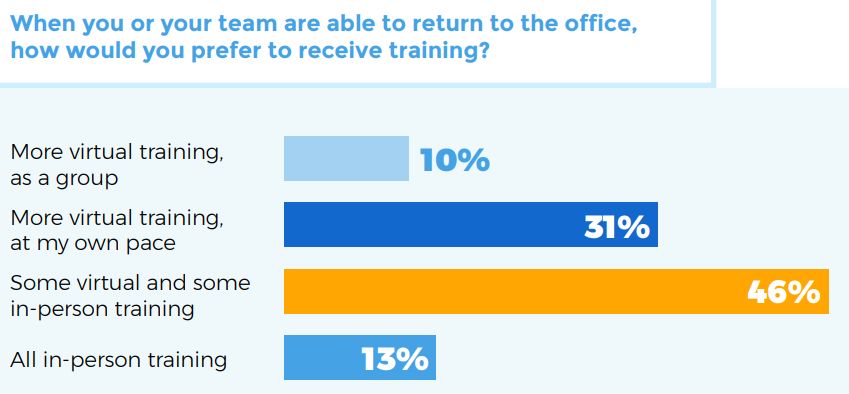
In a recent study by Kahoot, 46% of respondents said learning and development is more important than ever since the shift to remote working. Furthermore, 46% of respondents said they preferred training to continue to be a combination of virtual and in-person.
“The most popular preference for training is a blended learning system, with nearly 1 in 2 professionals saying they would prefer a mix of in-person and virtual training once they can be together at the office.”
My own experience has largely been the same. The level of learning in a virtual environment has been every bit as good as an in-person environment. The bonus of the virtual environment is that students are learning what is being taught, but also learning how they can effectively facilitate a virtual working group.
For example, in the Utah Lean Six Sigma Training Center Green Belt class, we have a team breakout session to practice effective brainstorming. When we teach in-person, groups stand together with Post-It notes in hand. In a virtual environment, students go into a Zoom breakout room and use the sticky notes tool in Lucidchart. (Side note: if you haven’t checked out Lucidchart already, do it. Now.) By doing so, the students learn how to effectively brainstorm, but they also know how to effectively use a free online tool so that they can virtually collaborate with their colleagues.
Virtual Training in 2021 and Beyond
At Utah Lean Six Sigma Training Center we remain dedicated to becoming the premier Lean Six Sigma training provider in Utah. We are passionate about providing training that is applicable to Utah industries, available in a variety of locations, formats, and schedules, attainable in a reasonable amount of time, and affordable for individuals and organizations. We have developed a robust live online format of instruction that dozens of students have successfully completed.
While I do believe that in-person training remains very desirable, I also believe that blended live/virtual training is absolutely here to stay and may even be the ideal solution. The world has shown that not only can we do it, but we can do it very well.